Lice caused Trench Fever, a nasty and painful disease that began suddenly with severe pain followed by high fever. Although not usually life threatening, Trench Fever was debilitating, requiring a recovery period of two-three months. It wasn’t until 1918 that doctors discovered that lice transmitted Trench Fever. Lice sucked the blood of a host infected by trench fever and then spread the fever to a successive host.
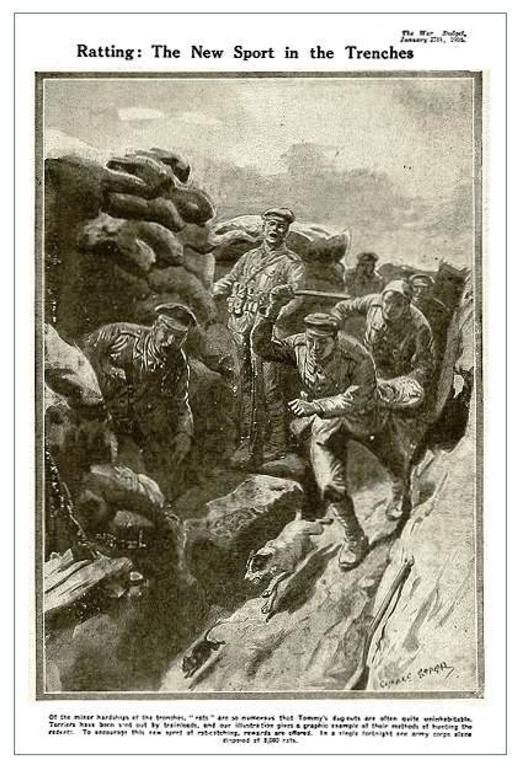
Trenches often flooded with rain in which frogs swam. Red slugs would ooze from the mud. At night opportunist rats crept out. Discarded food cans would rattle as the rats crept inside to lick the remains. More horrifically the rodents were sometimes referred to as corpse rats. They bred rapidly in their millions and swarmed through No-Mans Land gnawing the corpses of fallen soldiers.

Trench conditions were ideal for rats. There was plenty of food, water and shelter. With no proper disposal system the rats would feast off food scraps. The rats grew bigger and bolder and would even steal food from a soldier’s hand. But for some soldiers the rats became their friends. They captured them and kept them as pets, bringing a brief reprisal from the horror which lay all around.