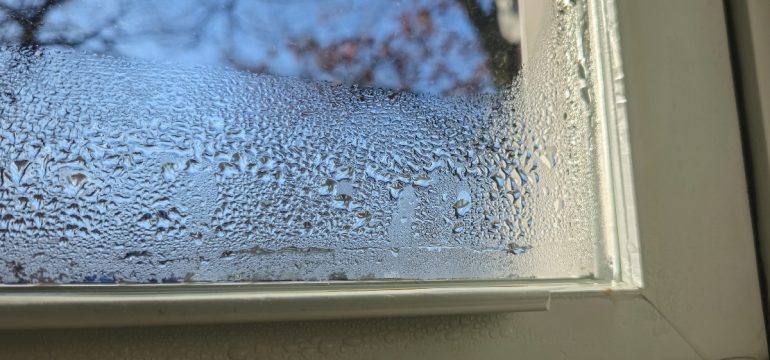

Waking up during the chillier months to find water droplets pooling along window sills, heavy misting across glass panes, and damp patches creeping onto exterior walls is a frustratingly familiar routine for many UK households. Beyond being a daily inconvenience to wipe away, persistent window moisture creates an uncomfortable living environment and often marks the beginning of unsightly black mould growth, peeling wallpaper, and damage to surrounding timber frames. But for many householders, this is also the beginning of a balancing act between the heating they can afford and the potential loss of that heat through ventilation.
When streaming windows become a daily occurrence, the immediate assumption is often that the heating simply needs turning up. This leads many homeowners and tenants to ask a fundamental question: does condensation mean my house is too cold?
While a cold indoor environment plays a central role in where and how quickly moisture settles, temperature is only one part of the puzzle. Condensation is the result of a delicate balance between indoor air temperature, atmospheric moisture levels, and ventilation across your property.
Does Condensation Mean My House Is Too Cold?
The direct answer is both yes and no. A cold house encourages condensation to form, but cold air alone does not create moisture out of nowhere. Condensation occurs when warm, moisture-laden indoor air comes into contact with a surface that is cold enough to rapidly cool that air down to a point where the invisible moisture becomes visible as droplets.
The Problem with Intermittent Heating and Cold Surfaces
In many UK homes, heating is turned on for brief bursts in the morning and evening, leaving rooms completely unheated for long stretches during the day or night. When heating is switched off, once the stored heat in the masonry runs out, the temperature of internal wall surfaces and window glass drops sharply.
At the same time, normal daily human activity (such as breathing, showering, cooking, and drying clothes indoors) continuously adds water vapour to the air. Warm air acts like a sponge, holding onto invisible water vapour. As a room cools down, the air loses its capacity to hold onto that moisture. When that cooling air meets an unheated exterior wall or cold glass pane that has dropped below a critical threshold known as the dew point, the airborne vapour turns back into liquid water droplets.
Unheated or intermittently heated rooms are particularly vulnerable to cold room condensation problems because their wall temperatures remain permanently chilled, creating an ideal landing pad for any moisture circulating through the house.
Optimal Indoor Temperatures
To maintain warm surface temperatures and prevent cold spots from forming on interior walls, it is recommended to aim for an indoor temperature of between 18°C and 21°C. Maintaining a low, consistent background heat keeps internal wall surfaces warmer, making it much harder for airborne water vapour to condense.
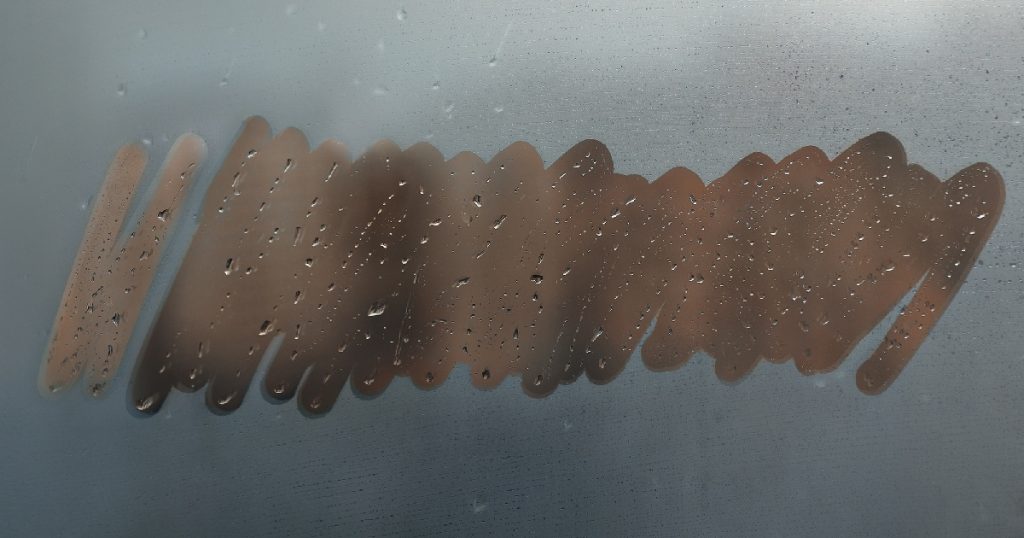
Understanding Dew Point, Humidity, and Thermal Bridging
To effectively tackle cold house condensation, it helps to understand the underlying science of how moisture behaves inside a building.
Dew Point and Relative Humidity
Relative Humidity (RH) refers to the amount of water vapour present in the air compared to the maximum amount of water vapour the air could hold at that specific temperature. Warm air can hold significantly more water vapour than cold air, as it is less dense.
The dew point is the exact temperature at which air becomes completely saturated and can no longer hold its water vapour, forcing the excess moisture to condense into liquid droplets on cold surfaces. Dew point moves with air temperature, and surfaces do not always feel cold when condensation forms.
Cold Weather and Thermal Bridging
During cold weather, external temperatures drop significantly below internal room temperatures. This temperature differential causes the internal surfaces of solid exterior walls to chill rapidly, especially around structural weak points. With cavity walls, even if not insulated, the differential will be much smaller.
This process is exacerbated by thermal bridging (often called a cold bridge). A thermal bridge is an area of a building structure that allows heat to transfer out of the property much faster than the surrounding insulated walls. Common thermal bridges include:
- Uninsulated window frames and lintels.
- External wall corners where heat dissipates from two sides simultaneously.
- Structural metal fixings or concrete beams passing through cavity walls.
- Solid masonry walls lacking modern insulation.
When warm indoor air hits these cold bridges, local surface temperatures drop below the dew point, resulting in localised cold wall condensation. These defects are often covered in mould or dust.
Key Warning Indicators
If high relative humidity and cold surface temperatures are left unmanaged, your property will display clear warning signals:
- Persistent misting, water droplets, or puddles on window glass and sills.
- Clusters of black, green, brown, yellow or white mould forming along window seals, behind heavy furniture, and in high wall corners.
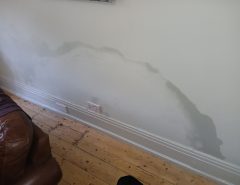
- Damp, peeling wallpaper or blistering paintwork on exterior-facing walls.
- A lingering, heavy, musty smell inside bedrooms, built-in wardrobes, and cupboards where there is minimal ventilation.
How to Stop Condensation in Your Home: Practical Control Measures
Controlling condensation permanently requires a balanced approach that addresses three core factors: managing moisture production, maintaining consistent background heating, and ensuring adequate ventilation.
1. Maintain Consistent Heating
Assuming heating the home adequately is an option, rather than running your heating at high temperatures for brief periods and allowing the house to go completely cold in between, keep your heating on a low, steady setting throughout the day during winter. With adequate ventilation, keeping room temperatures consistently around 18°C prevents wall surfaces from dropping below the dew point, eliminating the chilled conditions that attract condensation.
2. Improve Ventilation and Air Flow
Even a warm home will suffer from condensation if excess water vapour has no way to escape. Improving airflow carries moist air safely outside before it can settle:
- Trickle Vents: Keep trickle vents on window frames open continuously to allow a constant, subtle exchange of fresh air.
- Extractor Fans: Always run humidistat-controlled extractor fans in bathrooms and kitchens during and after bathing or cooking, leaving them on until excess steam clears.
- Positive Input Ventilation (PIV): For whole-house moisture issues, a PIV system introduces fresh, filtered air from outside or the loft space into the central landing or hallway, continuously diluting and displacing stale, moisture-heavy air throughout the property.
3. Manage Indoor Moisture Levels at Source
Simple, everyday lifestyle adjustments can drastically reduce the volume of water vapour released into your indoor air:
- Avoid drying wet laundry indoors on radiators. If you must dry clothes inside, use a dedicated drying room such as the bathroom, with a closed door and an open window or extract fan on.
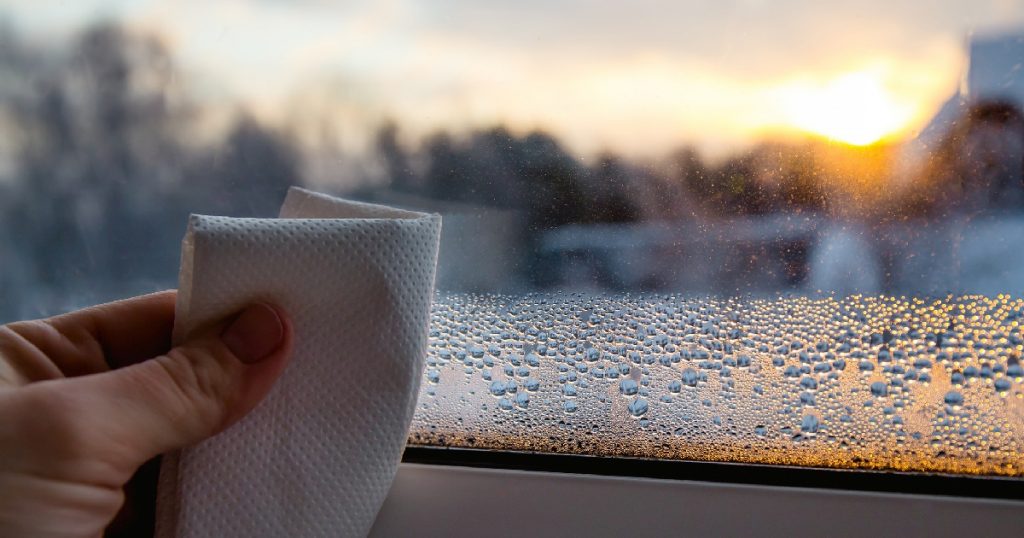
- Wiping down windows will remove the moisture, but ensure the cloth is wrung out in a sink, rather than dried on a radiator.
- Keep lids on pots and pans to trap steam while cooking on the hob.
- Keep bathroom and kitchen doors shut while bathing or cooking to prevent steam from migrating into colder bedrooms and hallways, where it may condense.
- Leave a gap between heavy furniture and exterior walls to allow warm air to circulate freely behind wardrobes and sofas. This is particularly important in bay windows where walls will be cooler.
4. Upgrade Insulation
Improving your home’s thermal performance keeps internal surface temperatures higher:
- Upgrade single-glazed windows to modern double or triple glazing featuring low-emissivity glass, warm-edge spacer bars and trickle vents.
- Install cavity wall or external wall insulation to eliminate cold bridges across solid masonry structures.
- Top up loft insulation and ensure it is laid evenly across the entire ceiling area to a depth of at least 270mm, eliminating cold spots and thermal bridges. Keep insulation clear of eaves vents to maintain loft airflow, and do not insulate under the water tank.
Do Window Hacks Work? (What to Rub on Windows)
When dealing with heavy window moisture, many homeowners turn to popular online DIY hacks to stop glass from misting up. One of the most frequent practical queries is: what can I rub on windows to stop condensation?
A widely shared hack involves applying a thin layer of liquid detergent, shaving foam, or specialist anti-fog sprays directly onto the interior glass using a dry cloth.
Do DIY Hacks Actually Work?
Detergents and anti-fog products contain surfactants that reduce the surface tension of water. Instead of forming visible, distinct droplets that obscure your view or pool on the sill, the moisture is forced to spread out into a thin, transparent film across the glass.
While this might temporarily make the window look clearer for a day or two, it does not actually get rid of the condensation or remove moisture from your home. The exact same amount of water vapour remains trapped inside your room. By preventing the water from condensing on the glass pane, the invisible moisture simply travels to the next coldest surface in the room, which is usually the surrounding plaster, wallpaper, or window reveal. This often leads to hidden, severe black mould growth in wall corners rather than visible water on the window.
Rubbing detergent on your windows merely masks the symptom while allowing the underlying moisture problem to worsen out of sight. Genuine condensation control requires removing excess water vapour from the air through proper ventilation and moisture management, rather than applying temporary surface coatings.
How Rentokil Property Care Can Help
Sometimes, minor lifestyle adjustments and DIY measures are not enough to fix a deep-seated moisture imbalance, especially in older UK properties with complex structural layouts or solid wall construction.
Rentokil Property Care provides expert survey services and comprehensive indoor air quality diagnostics to help homeowners find permanent, long-term solutions. Our qualified local surveyors use specialised thermal imaging technology and electronic hygrometers to accurately map moisture pathways, identify hidden cold bridges, and measure environmental humidity levels across your building fabric.
We offer tailored, energy-efficient condensation control systems, including the installation of specialised Positive Input Ventilation (PIV) units, mechanical heat recovery systems, and targeted damp prevention solutions designed specifically to suit UK building types. Whether your home requires structural insulation advice or an upgraded ventilation system, our PCA-accredited surveyors ensure your living environment remains warm, dry, and healthy.
Conclusion
Condensation is not simply a sign that your home is too cold; it clearly indicates that excess indoor water vapour is not being removed and is meeting cold, unheated surfaces. By combining consistent heating with proper daily ventilation and simple moisture reduction habits, you can stop window streaming and protect your home from mould for good.