
Worried about Cockroaches?
Contact us now for a local, responsive service.

Call us for a quote on 0808 163 1487
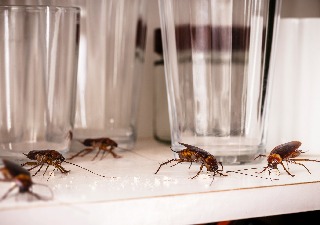
It is often easier to spot signs of a cockroach problem than the actual insect pest. Cockroaches are mostly nocturnal, during the day they prefer to stay hidden in cracks and crevices, coming out to feed mostly at night time. This means a property can have an active infestation even when you have only seen one insect, or none at all.
In many cases, the first clues are indirect, such as droppings, smear marks, shed skins, or an unusual musty smell in hidden areas. Because they avoid light and disturbance, cockroaches often gather behind appliances, under sinks, inside cupboards, and around pipework where food, warmth, and moisture are easy to find.
They will eat anything from foods, paper, packaging, plastics and fabrics to animal matter (i.e. hamster and rabbit droppings). If you notice these early signs, it is wise to check likely harbourage areas promptly so you can judge how serious the problem may be.
Some common signs can help you identify a possible cockroach infestation. You may notice droppings, smear marks, shed skins, or a stale, unpleasant smell in hidden areas. These signs often appear before you ever see live cockroaches. If you find more than one sign in the same area, it is a strong clue that cockroaches may be nearby and that you should check the surrounding space carefully.
An established cockroach infestation often produces a lingering, unpleasant odour that does not go away with normal cleaning.
Described as musty, oily, or stale, and it may seem stronger inside cupboards, under sinks, or near appliances. This smell can cling to surfaces and items in the area, especially in places where cockroaches are hiding, feeding, and moving about regularly.
Cockroach droppings are one of the clearest early signs of roach activity, especially when you do not see the insects.
If little water is available, cockroaches will produce brown or black cylindrical droppings, around 2mm long. These marks can often be confused with mouse droppings, but cockroach poops are usually smaller and may look more like dark grains or tiny pellets. You may find them inside cupboards, under sinks, behind appliances, along shelf edges, or close to cracks and crevices where cockroaches hide during the day. Fresh droppings in more than one area can suggest regular movement between hiding places and feeding spots. If you keep finding new droppings after cleaning, it is a strong sign that a cockroach infestation may already be established.
If water is abundant, cockroaches may leave brown, irregular smear marks instead of firm droppings. These marks often appear where their bodies brush against surfaces as they travel through damp areas.
Check carefully along wall-floor junctions, around skirting boards, behind appliances, and on horizontal surfaces near sinks, pipes, or drains. Fresh roach smears can look greasy or streaky, which can help distinguish them from ordinary dirt or food spills. If you find marks together with a musty odour, shed skins, or pepper-like droppings, this can point to active cockroach activity nearby.
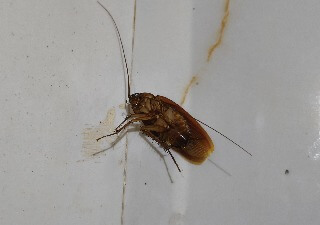
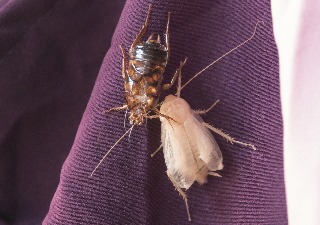
As cockroaches grow, they moult several times and leave behind pale brown or tan empty skins that can look like thin paper shells.
These are 'cast nymphal' skins, which they shed five to eight times as they mature to adults. These shed skins are often found in the same hidden spots where cockroaches rest during the day, such as behind appliances, inside cupboards, under sinks, and near pipework. If you notice these skins along with droppings, smear marks, or a stale unpleasant smell, it is wise to inspect the area more closely and act quickly.
Identifying the location of a cockroach infestation can depend greatly on the species of cockroach that has invaded your property. Some prefer warm and humid areas, whilst other species can tolerate cooler conditions. This is why a careful check should focus on places that offer shelter, moisture, warmth, and easy access to food. The first signs are often found in kitchens, bathrooms, utility rooms, basements, and around pipework or drains.
Cockroaches usually stay close to tight cracks, dark corners, and hidden spaces during the day, so visible activity often points to a nearby harbourage. Looking at where you find droppings, smear marks, shed skins, or a musty odour can help narrow down the area where they are hiding. If you notice signs in more than one room, the infestation may already be spreading through wall voids, service ducts, or gaps beneath units and appliances.
Cockroaches are widespread because they can thrive on very little. Only a few species affect UK properties and are considered pests, and although they all seek food, water and shelter, their habits and preferred hiding places can vary. Knowing which species is most likely to be present can help you make better sense of the signs you find, such as droppings, smear marks, shed skins or where activity seems most concentrated. Common cockroach species often found in the UK are:
If you have noticed any of the signs above, it is sensible to act quickly, as cockroaches can spread swiftly once they have a secure source of food, water, and shelter.
Try to avoid disturbing the area too much before a professional inspection, because this can cause them to scatter into new hiding places and make the problem harder to trace. If possible, make a note of what you have seen, where you found it, and whether you spotted droppings, smear marks, shed skins, or a live insect, as these details can help with identification. You can also check nearby rooms such as kitchens, bathrooms, utility areas, basements, and drains for further signs of cockroach activity.
If the evidence points to a likely infestation, arranging professional treatment to get rid of cockroaches is usually the quickest and most reliable next step. Contact us to arrange an inspection of your home or business for signs of cockroach activity. A professional cockroach treatment can help bring the infestation under control and reduce the risk of it returning. We can also advise on helping to prevent cockroach problems in the future.
Cockroach droppings vary by size and species. Small roaches like German cockroaches leave fine specks resembling coarse ground black pepper or dark coffee grounds. Larger roaches, such as American cockroaches, produce small, solid, dark cylindrical pellets with squared-off ends and distinctive longitudinal ridges running along their sides.
Cockroach faeces concentrate near nests, food sources, and travel routes. You will most frequently spot them inside kitchen larders and food cupboards, behind or underneath warm appliances like refrigerators and dishwashers, along baseboards, inside cabinet hinges and drawer seams, and around damp plumbing fixtures under sinks.
While large roach droppings and mouse pellets look similar at a glance, the shape can reveal the difference. Cockroach pellets are blunt and squared off at both ends, featuring noticeable ridges along their sides. In contrast, mouse droppings are smooth, slightly larger (three to six mm), have tapered, pointed tips, and can contain tiny, embedded hairs.
Cockroach egg cases (oothecas) look like tiny, rigid, pill-shaped capsules or dried kidney beans. Measuring roughly five to ten mm in length, they range from light tan to dark reddish-brown or black. They have a hardened protective outer shell with a subtle seam or serrated ridge along one side. Each case can contain anywhere from 12 - 50 eggs depending on the species.
