Worried about Cockroaches?
Contact us now for a local, responsive service.

Call us for a quote on 0808 163 1487
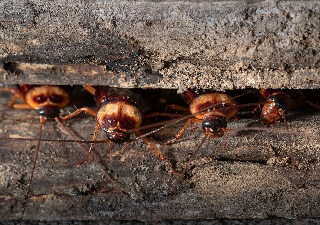
Getting rid of cockroaches starts with finding signs of roaches, where they hide, what attracts them, and how far the infestation may have spread. These pests usually stay close to food, moisture, and warmth; therefore, kitchens, bathrooms, boiler rooms, storage areas, and cracks behind appliances should be checked first.
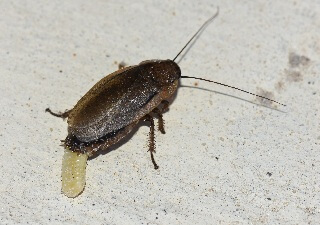
Effective cockroach eradication depends on more than killing the insects you can see, because egg cases (Oothecae; a hard, bean-shaped capsule that holds dozens of developing cockroach embryos) and hidden harbourages often remain active out of sight. However, a lasting elimination usually requires a combination of careful cleaning, professional targeted treatment, and practical proofing to block future access.
DIY products may reduce visible activity for a limited time, but they often miss nesting areas where cockroaches continue to breed. Professional pest control can be more effective for established infestations, since our qualified technicians can identify the species, apply the right treatment, and plan follow-up visits to break the breeding cycle. Moreover, long-term prevention is essential, because even a small surviving population can lead to re-infestation if food residue, leaks, and entry points are left in place.
Home remedies for roaches may reduce activity for a short time, however they rarely eliminate the source of an infestation. Cockroaches hide deep in cracks, wall voids, kitchens, drains, and appliance spaces, so surface cleaning and store-bought mixtures often miss key, deep rooted harbourage areas. Also, eggs can remain protected in oothecae, which means new cockroaches may appear even after adult insects seem to be gone. Some household methods can also spread roaches into new areas if the treatment disturbs them without removing the nest. Therefore, while home remedies may help short-term to alleviate minor sightings, professional cockroach removal is the most effective option for complete cockroach removal and long-term prevention.
While over-the-counter insecticides and DIY remedies appear budget-friendly at first, they rarely eliminate cockroach infestations completely, because they miss hidden nests, fail to target root causes, and often encounter pesticide-resistant strains. Here is a breakdown of common DIY and home remedies, along with their distinct limitations:
While home remedies target only visible individual insects, professional pest control addresses the entire ecosystem of the cockroach infestation.
If you have identified a cockroach problem in your home or business, professional treatments can provide a long-term solution for these unwanted pests. Our pest control professionals know the best solutions to combat cockroach infestations and help reduce the risk of re-infestation.
Our qualified Technicians can inspect your property in detail, locate harbourage areas, and identify the extent of activity that may not be visible at first. This is important because cockroaches often remain hidden in cracks, service voids, kitchens, and storage areas during the day. Professional cockroach control also uses targeted methods, such as gel baits, residual sprays, and insecticidal dusts, which are tailored to the specific cockroach species and level of infestation. Furthermore, follow-up visits can break the breeding cycle by treating newly hatched cockroaches before the infestation becomes established again. Therefore, expert treatment is often more effective than relying only on short-term DIY products.
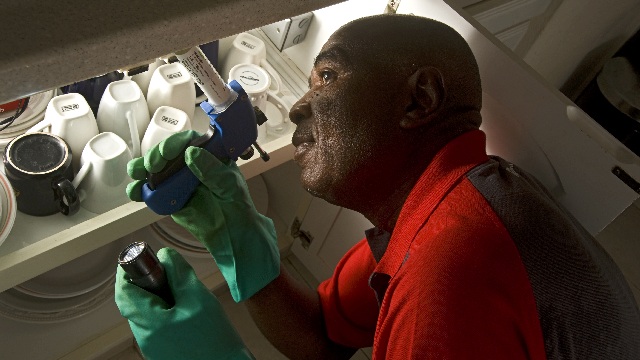
Every effective treatment starts with precision. Rentokil provides a structured cockroach eradication service designed to remove active infestations and reduce the chance of them returning. Our service begins with a thorough inspection of your property. This will help us to identify any potential shelters and harbourages, identify access points, and measure the extent of roach activity across your premises. We check high-risk areas such as kitchens, bathrooms, storage rooms, drains, and wall voids, where heat, moisture, and food debris often support cockroach activity.
Our technicians look for droppings, smear marks, egg cases, cast skins, and live insects, because these cockroach signs help confirm where the infestation is active.
Furthermore, this detailed assessment allows us to identify the cockroach species involved and choose the most effective cockroach treatment for your home or business. However, inspection is only the first step, and it is vital because hidden harbourages can allow a cockroach infestation to continue even after surface activity appears to stop.
By locating entry points, nesting sites, and conditions that attract roaches, we can build a targeted plan that supports lasting cockroach control and reduces the risk of re-infestation.
We then select targeted treatments based on the cockroach species present, the severity of the infestation, and the layout of your home or business. This may include professional gels, sprays, or dust formulations placed in cracks, voids, and other concealed areas where cockroaches live and breed. However, treatment alone is rarely enough if underlying conditions remain, so our technicians also advise on sanitation, proofing, and moisture control. Furthermore, follow-up visits can be arranged to monitor results, treat newly active areas, and address hatching egg cases before the infestation becomes established again. Therefore, professional pest control is often the most effective option for anyone who needs a reliable, safe, and long-term solution.
Yes, seeing a single cockroach often warrants concern. Cockroaches are nocturnal pests that thrive in hidden, dark spaces, meaning visible daytime activity typically indicates overcrowded harbourage or a larger, hidden population nearby. Furthermore, a single female can produce hundreds of offspring annually, rapidly turning an isolated sighting into a severe infestation.
The most effective strategy relies on Integrated Pest Management (IPM), combining strict sanitation, entry-point exclusion, and target-specific control treatments. Eliminating food and moisture sources deprives pests of essential resources, while professional-grade gel baits and insecticidal dusts systematically eliminate hiding colonies. Avoid broad aerosol sprays or foggers, which often fail to reach nests and can displace pests further.
The most effective treatments are slow-acting gel baits and insecticidal dusts. Gel baits contain attractive food bases mixed with insecticides that roaches carry back to contaminate the broader nest. Applied into cracks and crevices, insecticidal dusts physically damage the pest's exoskeleton or disrupt its digestive system for long-term control.
While cockroaches are capable of biting, instances of them biting people are extremely rare. As omnivorous scavengers, they generally avoid human contact, but they may nip at exposed skin during severe, high-density infestations when alternative food sources become scarce. Most skin reactions attributed to bites are actually allergic responses to shed skins and droppings.
Bleach can kill cockroaches on direct contact by corroding their exoskeletons or suffocating them, but it is an inefficient and unsafe control method. It fails to reach hidden nests where colonies breed and produces toxic, hazardous fumes. Relying on bleach risks respiratory irritation and surface damage rather than addressing the root cause of the infestation.
Vinegar does not act as an effective cockroach repellent, nor will it eliminate an active infestation. While the strong smell of acetic acid may briefly deter them, roaches quickly adapt to the scent once it dissipates. However, distilled white vinegar can serve as a non-toxic cleaning agent to dissolve grease and food residues that attract roaches initially.
Cockroaches may be repelled by strong essential oils, including peppermint, eucalyptus, lavender, citrus, and tea tree oil. Concentrated natural scents disrupt their chemical senses, making treated areas seem unappealing. However, while essential oils and natural repellents can temporarily deter roaches from specific surfaces, they will not eliminate an existing nest or provide long-term pest eradication.