Do you have a fly infestation?
Don't waste time, book a survey with one of our experts.

Call us for a quote on 0808 163 1487
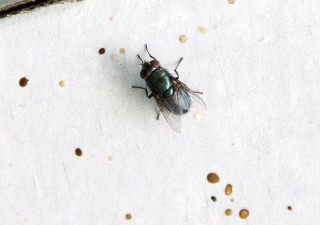
Flies can be a nuisance when buzzing around your home or business. You may initially decide it’s easier to ignore the problem, especially during warmer summer months, but if you see flies in large numbers, you could be facing an infestation, which may require professional fly control.
A sudden increase in fly activity often means there is a food source or breeding site nearby. This could be linked to food waste, overflowing bins, drains, damp areas, or animal waste. Small indoor flies may also gather near fruit bowls, houseplants, or kitchen sinks, depending on the fly species. However, repeated sightings in the same area usually suggest the problem is not random. Since flies can spread germs and contaminate surfaces, it is important to check for early signs and act quickly.
If you've noticed an uptick in unwanted buzzing, you might be dealing with more than just a stray fly that drifted in through an open window. Spotting these signs early usually points to a nearby breeding site or access point that needs immediate attention.
What to look for: Tiny, pinhead-sized dark spots clustered together.
Where to check: High-up surfaces, light fittings, and upper walls.
Don't forget hard-to-reach areas where organic waste accumulates—such as drainage channels, gully drains, and sub-floor cavities (especially if there's a damaged pipe).
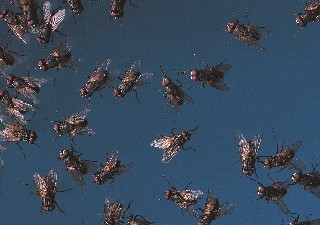
What to look for: A sudden swarm or persistent group of flies indoors or hovering consistently outdoors.
Where to check: Look around wheelie bins, food waste caddies, and compost bins.
Also outdoors, inspect anywhere standing water gathers: clogged guttering, garden water butts, old tyres, or waterlogged plant pots.
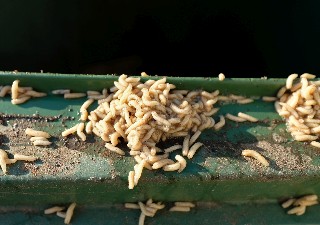
What to look for: Small, legless larvae moving through waste or decaying material.
Where to check: Finding maggots is a clear sign that flies are actively breeding on your property.
You'll typically spot flies in and around kitchen food bins, unwashed recycling containers, or near decomposing organic matter.
Pro Tip: Addressing the root cause—such as stagnant water, unsealed bins, or compromised drainage—is the most effective way to break the fly breeding cycle and keep your space fly-free.
Flies can cause potential harm by spreading germs onto worktops, and other surfaces. They can contaminate exposed food, which raises the risk of illness. Some species also bite people or pets, while others breed quickly in waste, drains, or rotting material. Since flies often gather near hidden moisture or decaying matter, their presence may point to a larger hygiene issue that needs attention.
Seeing one or two flies buzzing around a room is normal—especially during the warmer UK summer months. However, an infestation is a much more serious issue that won't go away on its own. You're likely dealing with an active fly infestation if:
Explore our range of professional fly control solutions such as EcoCatch External Fly Trap, our award winning range of Lumnia LED Electric Fly Killers and our Fruit Fly Riddance solution for hospitality businesses to restore safety, hygiene, and peace of mind to your property.
If your home has suddenly been invaded by unwanted buzzing, you're not alone. A sudden fly problem can often be traced back to a fresh food shop, a missed bin collection day, or subtle plumbing leaks.
Flies are opportunistic invaders, slipping inside through minor gaps around window frames, open doors, or air vents. Once indoors, they are drawn to moisture, decaying food, dirty sink drains, pet waste, and even waterlogged houseplants.
Not all flies are after the same thing. Identifying what’s attracting them is the first step to getting rid of them:
Many species lay eggs directly on or near organic waste. Because some species of fly eggs can hatch in under 24 hours, a single female can trigger a new wave of adult flies almost overnight. If you're cleaning regularly but the swarms keep returning, you're likely dealing with an established infestation that requires targeted action.
Flies are drawn to two key ingredients when choosing a nursery for their offspring: moisture and decaying organic matter.
Female flies lay tiny, off-white eggs in hidden nooks where emerging larvae (maggots) will have an immediate, rich food source. Because these eggs are barely the size of a grain of rice, they often go unnoticed until they hatch—which with some species can happen in as little 24 hours in warm weather.
A Note on Cluster Flies:
Not all flies are seeking out rotten food. Cluster flies, for instance, do not breed indoors or on waste. Instead, as the weather cools in late autumn, they gather in large numbers to hibernate (overwinter) in quiet areas like lofts, roof spaces, and wall voids—only to emerge in spring as the space warms up.
Key Takeaway:
Eliminating stagnant moisture, keeping bins tightly sealed, and cleaning up organic spillages immediately disrupts the breeding cycle before a few eggs turn into a full-blown infestation.
We provide tailored, comprehensive fly control services across the UK for all common pest species:
No matter the species, our professional fly deterrents and fly treatments eliminate active swarms and help prevent future infestations—keeping your property clean, hygienic, and fly-free.
If persistent fly activity spreads across multiple areas or standard DIY fly control fails to solve the problem, the underlying source needs professional identification and treatment.
Without intervention, a fly infestation can persist indefinitely. Female flies’ lays hundreds of eggs that can mature into breeding adults within days in warm UK weather. As long as a moist food source or breeding site remains accessible, new generations will continuously emerge, turning a brief nuisance into an ongoing problem.
A true fly infestation rarely resolves on its own. While individual adult flies tend to die within a few weeks, the population will continue to multiply as long as eggs and larvae (maggots) have access to food and moisture. Resolving the issue permanently requires finding and eliminating the breeding source alongside treating live flies.
Trace fly activity to areas with standing water, organic sludge, or decaying matter. Inspect food waste caddies, beneath appliances, around kitchen sink drains, and inside wheelie bins. If blowflies or cluster flies suddenly appear, check roof spaces, chimneys, and cavity walls for dead rodents, pest remains, or damp structural materials.
A sudden indoor swarm usually indicates a hidden breeding event that has just matured. Common UK triggers include an undetected dead rodent or bird in a loft or wall cavity, a forgotten bag of rotting potatoes, or an unwashed food waste caddy. Open windows, unsealed doors, and compromised drainage also allow outside swarms’ swift entry.