
Call us for a quote on 0808 163 1487
How to Identify Signs of Fleas
If your pet is constantly scratching or biting their fur, it’s hard to tell if you're dealing with a skin infection or a flea problem. While human fleas are rare in the UK today (thanks to modern cleaning and insecticides) cat fleas and dog fleas remain a common threat that can quickly lead to a household infestation. Before rushing to the vet, here is how to identify these pests and check your home for signs of flea activity.
5 Most Common Signs of Having Fleas
If you suspect your property has been invaded by these tiny biting insects then there are 5 common signs of fleas that you can look for to confirm your suspicions:
1. Excessive Scratching or Grooming
You may notice your pet biting, licking, or scratching more than usual, particularly around the hindquarters, neck, and base of the tail. If you're the one scratching, look for clusters of small, itchy red bumps around your ankles or shins, potential flea bites.
2. "Flea Dirt" (Droppings)
Despite the name, this isn't actually dirt—it's flea excrement (digested blood). It looks like tiny grains of black pepper on your pet’s skin, in their bedding or in your carpet or rugs.
- The Test: Pick some up with a damp white paper towel. If it dissolves and turns a reddish-brown colour, it’s flea dirt.
3. Visible Jumping or Crawling
Adult fleas are about 1-2mm long, reddish-brown, and incredibly fast. You might catch a glimpse of them scurrying through your pet's fur during a belly rub or see them leaping off carpets or furniture. They can jump up to 80 times their own height, making them the Olympic athletes of the pest world.
4. Flea Eggs or Larvae
Flea eggs look like tiny grains of white salt or sand. They aren't sticky, so they often fall off your pet and hide in:
- Carpet or rug fibres
- Floorboard cracks
- Pet bedding
- Upholstered furniture
5. Pet Pale Gums (In Severe Cases)
This is a more serious sign, especially in kittens or puppies. Because fleas feed on blood, a heavy infestation can lead to anaemia. If your pet’s gums look pale pink or white instead of a healthy bubble gum pink, they need a vet visit immediately.
What do fleas look like?
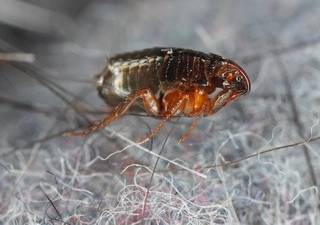
To the naked eye, a flea often just looks like a tiny, dark speck that moves very quickly. However, their appearance changes drastically depending on which stage of their life cycle you are looking at.
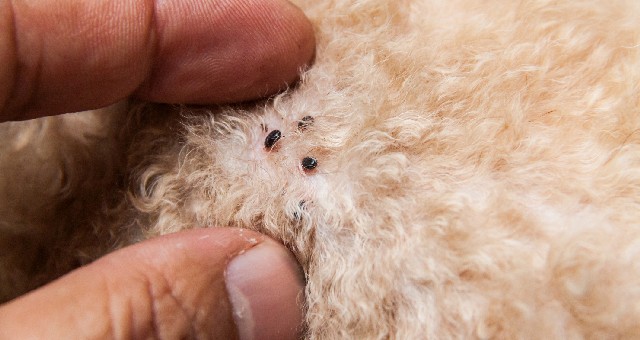
The Adult Flea
This is the stage most people recognise. If you manage to catch one or see it under a magnifying glass, you'll notice:
- Size: About 1–3 mm long (roughly the size of a poppy seed or a grain of sand).
- Colour: Dark reddish-brown or black. They look darker when they are "hungry" and more reddish-brown after a blood meal.
- Shape: They are laterally compressed, meaning they are very thin from side-to-side. This allows them to "skate" between individual hairs on your pet.
- Features: They have six long legs, with significantly larger hind legs for jumping. They have no wings, but their bodies are covered in backward-pointing bristles that act like "Velcro" to help them stick to fur.
Flea Eggs
If you see adult fleas, you almost certainly have eggs in your carpet, rugs and pet bedding.
- Appearance: Tiny, pearly-white ovals.
- Comparison: They look exactly like individual grains of salt.
- Key Detail: Unlike many other parasite eggs, flea eggs are not sticky. They roll off your pet’s fur and settle deep into the fibres of your carpet, furniture, or floor cracks.
Flea Larvae
You will rarely see these larvae because they are "photophobic" (they hate light) and crawl deep into dark crevices.
- Appearance: They look like tiny, off-white, legless maggots or worms.
- Size: About 2–5 mm long (actually longer than the adults).
- Colour: Translucent white, but they often look slightly reddish or brown inside because they feed on "flea dirt" (digested blood).
Flea Pupae
This is the most dangerous stage of the flea lifecycle because they are nearly indestructible in this form.
- Appearance: A small, silken cocoon.
- Key Detail: The cocoon is sticky, so it quickly becomes covered in household dust, pet hair, and carpet fibres. This makes them look like a tiny, inconspicuous "dust clump" or a clump of dirt that is almost impossible to see or vacuum up.
Can you see fleas?
Yes, you can see adult fleas with the naked eye, though they are quite small and very fast. Finding them often feels like a game of "hide and seek" because they are very good at disappearing into fur or fabric the moment they are disturbed.
To identify them accurately, here is what to look for and where to find them:
What an Adult Flea Looks Like
Size: They are about 1–3 mm long—roughly the size of a poppy seed or a grain of sand.
Shape: They are flattened from side to side (like a surfboard). This shape allows them to slice through dense pet fur with ease.
Colour: They appear dark reddish-brown or black.
Action: You’ll rarely see them "walking." Instead, you’ll see them scurry like a tiny shadow or disappear in a sudden, explosive jump.
What Flea Eggs and Larvae Look Like
While adult fleas are 5% of the problem, the other 95% consists of eggs and larvae hiding in your property.
- Eggs: These look like tiny, pearly-white ovals. They are about the size of a grain of salt and are often mistaken for dandruff. Unlike dandruff, however, flea eggs are perfectly uniform in shape.
- Larvae: These look like microscopic, off-white caterpillars or worms. They are about 2–5 mm long and have no legs. They hate light, so you’ll usually only see them if you peel back the edges of a carpet or look deep in the seams of pet bedding.
The "White Paper" Test
Because fleas are so small, it is often easier to see what they leave behind (flea dirt) than the bugs themselves.
- Have your pet stand on a white paper towel or a white sheet.
- Thoroughly scratch their fur or use a fine-tooth comb.
- Look for tiny black specks that fall onto the paper.
- Mist the specks with a little water. If they dissolve and turn reddish-brown (like blood), you have confirmed a flea infestation.
Where to Look Right Now
- On Pets: Focus on the "hot spots" - the base of the tail, the neck, and the tops of legs.
- On People: Check your ankles and lower legs for small, red, itchy bumps, usually appearing in groups of three.
- In the House: Check your carpet, rugs and mats (especially around the pet bedding) and on the pet bedding itself.
What is the Flea Life cycle?
To truly win a war against fleas, you have to realise that the adult fleas you see on your pet are only about 5% of the total population. The other 95% are currently invisible, living in your carpets, rugs, pet bedding and furniture as eggs, larvae, and pupae. The flea life cycle is a four-stage process that can take anywhere from two weeks to several months, depending on the temperature and humidity.
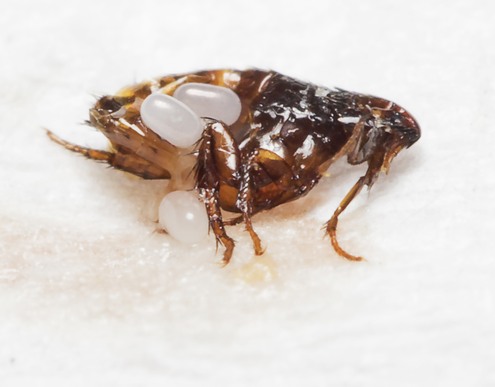
The Egg (Approximately 50% of the population)
After an adult female flea has her first blood meal, she begins laying eggs within 24 to 48 hours.
- Volume: A single female can lay up to 40–50 eggs a day.
- Movement: They are smooth and not sticky, so they roll off your pet whenever the pet moves, settling deep into carpets, floorboard cracks, and pet bedding.
- Timeline: They hatch in 1 to 10 days.
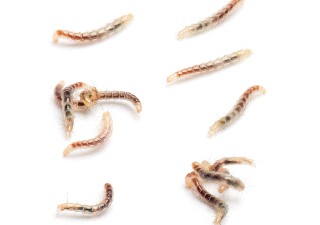
The Larva (Approximately 35% of the population)
Once hatched, flea larvae look like tiny, legless white worms.
- Diet: They don't bite yet; they feed on "flea dirt" (the digested blood droppings from adult fleas) and other organic debris.
- Behaviour: They are photophobic, meaning they hate light. They will crawl deep into carpet fibres or under baseboards to stay in the dark.
- Timeline: This stage lasts about 5 to 11 days.
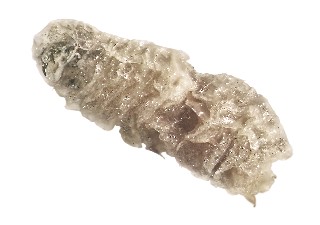
The Pupa/Cocoon (Approximately 10% of the population)
This is the most difficult stage to kill. The larva produces a cocoon that is sticky, attracting dust and hair to provide perfect camouflage.
- Protection: The cocoon is nearly impenetrable to household insecticides and vacuums.
- The "Waiting" Game: They can stay dormant for weeks, months, or even a year.
- The Trigger: They only emerge when they sense vibration, heat, or carbon dioxide, which tells them a host (you or your pet) is nearby. This is why "empty" properties can suddenly have a flea outbreak the moment someone moves in.
The Adult Flea (Approximately 5% of the population)
As soon as the adult flea emerges from the cocoon, it must find a host and feed within a few hours to survive.
- Goal: Once they find a host, they stay there. They feed, mate, and begin the cycle all over again.
- Lifespan: An adult flea can live for a few months on a host.
Flea life cylce visual created with the assistance of AI.
Contact Us
Signs of Fleas FAQs
-
Where do fleas come from?
Fleas don’t just appear out of thin air. Fleas are "hitchhikers" entering your property via wildlife like foxes, squirrels, hedgehogs, birds, feral cats and rodents, or pet social spots like kennels and parks. Fleas often jump onto your clothing or shoes from infested grass. Also resilient flea pupae can lie dormant in carpets or floorboards for months, emerging only when they detect the warmth or vibrations of a new host.
-
What are Flea droppings?
Flea droppings, or "flea dirt," are actually tiny specks of digested blood. Resembling black pepper, they turn reddish-brown when placed on a damp white paper towel. Finding this grit on your pet or bedding indicates an active infestation, as these droppings serve as the primary food source for developing flea larvae living in your carpets and furniture.
Next Steps
Flea Problems
More information on Flea Infestations