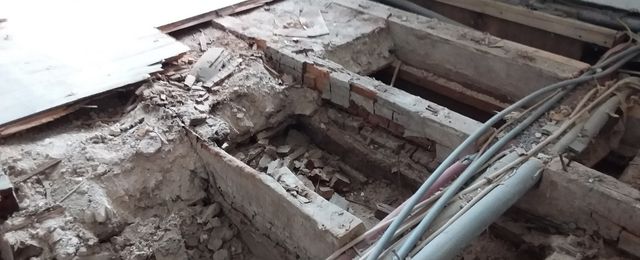
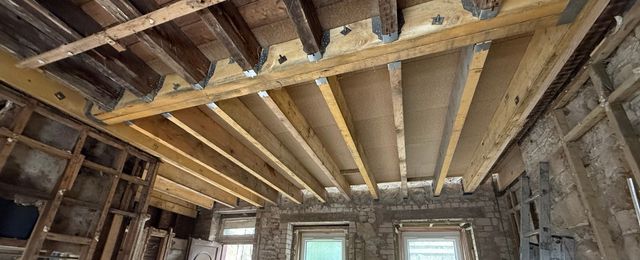
Case Study: Dry Rot in Derbyshire
Rentokil Property Care expertly solved a severe Dry Rot issue in Derbyshire.

Call to Book a Survey +448083018423 or Contact Us Online
Dry rot is a severe type of fungal decay which causes timber to lose its structural integrity. In many cases a dry rot outbreak outbreak will require a professional to fully identify the extent of the problem, and this is done through a damp and timber survey.
Once dry rot has been identified and confirmed, a dry rot treatment will be needed to fully eradicate the outbreak from a property. This can be a complex process as dry rot is capable of growing through masonry, across surfaces and spreading far wider than the original source of moisture that the outbreak originated from.
We have put together a guide on how dry rot treatment progresses, and the extent experienced technicians will go to make sure your property is safe and fit for purpose. If caught early a dry rot problem may be prevented before it has carried out significant damage, but if left untreated it could lead to more costly repairs in the future.
Wood-destroying dry rot fungus (Serpula lacrymans) is a far more serious problem than wet rot. Although both will feed on wood to the point it loses structural integrity, dry rot is capable of spreading in search of new timber to attack, whereas wet rot is isolated at the source of moisture. This means that dry rot can spread across the whole sub floor void, throughout multiple rooms or even several stories of a building. The extent of growth can vary depending on moisture and temperature, but on average dry rot could grow as far as one metre in all directions a year.
In severe cases it can lead to structural timber collapse, and can even travel through party walls into neighbouring properties. If you spot the signs of dry rot, or if dry rot is identified during a damp and timber survey, it is essential that the problem is dealt with immediately in order to prevent further damage.
If left untreated, dry rot can cause significant damage to structural and decorative timber. It is not uncommon for whole sections of timber in a property to require replacement.
If you catch a dry rot problem at a very early stage, it may be possible to carry out dry rot treatments to prevent the problem escalating, which would usually be to remove the source of moisture. But dry rot is pernicious and often hidden from view, so it is best not to take any chances. If however the problem is severe and has caused damage to structural timber, it is recommended that you seek advice from a qualified professional.
This is because you will need a thorough investigation to fully understand the extent of the problem, and the structural integrity of timber in the surrounding area will need to be assessed. It is possible that masonry will also need to be treated to eradicate any dry rot spores on the surface or inside.
Rentokil Property Care have a number of qualified surveyors who can carry out a thorough survey of the property, and provide you with advice and recommendations on how best to proceed.
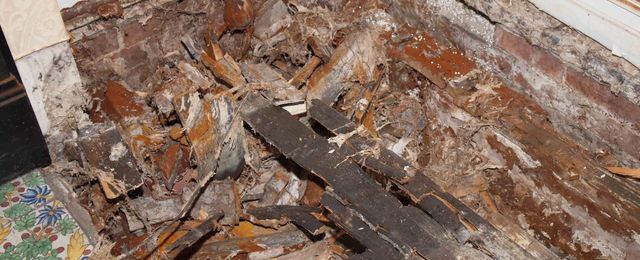
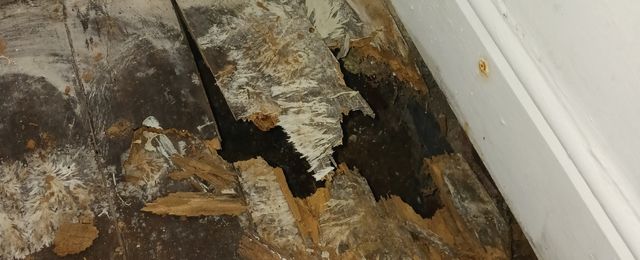
The main concern with dry rot is the ability for an outbreak to cause severe structural damage to timber, as it feeds on the wood structure which causes it to become brittle and weak. This means that floors may sag, floorboards crack and in severe cases load bearing joists and beams give way. This could cause serious injury to those within the property.
Dry rot outbreaks are sometimes caused by high levels of humidity, damp and condensation within a property. This in itself can cause issues for occupants. If you are concerned about a fungal decay problem in your property, you should seek a professional damp and timber survey for clear answers and expert solutions.
Dry rot spores are all around us in the atmosphere, but require certain conditions in order to germinate and begin a dry rot outbreak.
Outbreaks will often occur in damp, dark and poorly ventilated areas. Dry rot mycelium will consume damp timber, and is able to consume timber with as low as 20% moisture content, but ideally a 30-40% moisture content. Dry rot will thrive in dark places around 22°C,up to a maximum of 26°C. Because of this the most common cause of a dry rot outbreak is from lack of sub floor ventilation, building defects, leaks or a damp problem. This can be caused by blocked or missing air bricks, damaged gutters or drains backing up and penetrating into the fabric of the building, or even from leaking appliances like washing machines or dishwashers.
Damp is a common problem that causes dry rot, from rising damp affecting ground floor timbers or penetrating damp through walls or around windows, or even spalled masonry and missing mortar.
If there is poor ventilation it is possible for condensation to build up and provide the source of moisture for dry rot spores to germinate. Because the moisture causing the problem can originate from different sources, this makes it vitally important to have a professional carry out a damp and timber survey to fully understand what is causing the problem, and how to prevent it for good.
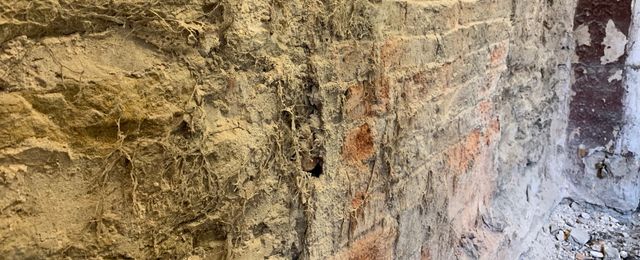
As part of the dry rot life cycle, the outbreak will grow structures known as hyphae that join together to form a mass known as Mycelium, similar to a ‘root system’. These will grow over over masonry, concrete and steel surfaces, and can even penetrate through masonry and concrete walls in search of search of new timber to attack.
Even if the source of moisture is temporarily removed, the problem could re-amerge in the future if a new source of moisture is present, as the mycelium and strands lay dormant within the masonry. This is why fungicidal treatments are required where there is masonry near the outbreak.
Dry rot mycelium and strands cover the surface of this masonry wall. They can lay dormant and will germinate if a new source of moisture is found - this is why it is important to carry out fungicidal treatments to masonry.
The first step in the treatment process is for a Rentokil Property Care qualified surveyor to confirm a dry rot outbreak through a professional damp and timber survey. Once they have fully investigated the property, they will provide you with a detailed report outlining their findings, along with recommendations for treatments.
If you wish to go ahead with the recommendations, remedial repairs carried out by our experienced technicians will begin at a time suitable to you.
The first step is to remove the source of moisture that is causing the dry rot outbreak. This can be fixing a building defect, carrying out damp proofing for rising damp or penetrating damp, or by increasing ventilation to stop condensation forming.
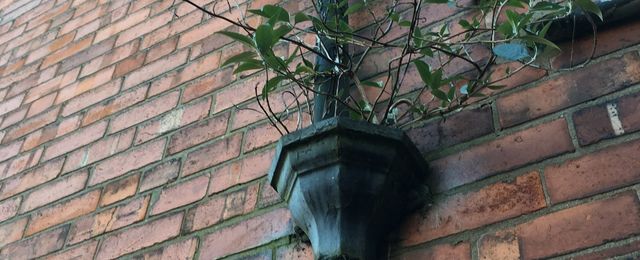
Often building defects provide the source of moisture required for dry rot spores to germinate. Moisture can penetrate through into a building, saturating timbers. Foliage will cause water to overflow down the wall.
All fruiting bodies and mycelium will be removed from the area. Surfaces will be wire brushed down to remove growth and spores.
All decayed wood and damaged linings such as panelling, skirting and ceilings that show signs of mycelium, hyphae or fungal fruiting bodies are removed to prevent the further spread of the fungus. Sometimes sections of timber can be retained, but technicians will remove all affected timber extending beyond the last visible signs of damage. This is typically assessed in 300mm sections beyond the last point of fungal growth on the timber.
Areas where dry rot mycelium has been in contact with plasterwork will be stripped back to the masonry to help remove any growth, where required.
Damaged timbers will need to be cut back and removed, including decayed beams and joists.
The next step is to apply a fungicidal treatment to kill the dry rot spores and any remaining mycelium. If structural timbers and brickwork are affected by the dry rot fungus then a fungicidal paste, spray or injection is applied to form a protective chemical barrier.
This will not only prevent wood-rotting fungi from re-establishing themselves but prevent attacks from wood-boring insects for many years to come.
Where necessary we will surface treat surrounding masonry with fungicide. Masonry must be sterilised to prevent fungal spores within the masonry and any fragments of mycelium from spreading in the future. This treatment will have to seep deep into the substrate to ensure the spread of the dry rot fungus is prevented. Masonry injection may be required around built in timbers.
Application of fungicide to masonry often triggers ‘sporophore flush’ after treatment. This is a natural reaction of the fungus to try to sporulate to save the species from extinction. This is why it is important to remove all the timber that is feeding the outbreak.
New timbers can then be expertly replaced. New joists and beams will be laid and floorboards reinstalled. Pre-treated timber are used where required or treated in-situ. Where timber is in contact with masonry, the timbers will be wrapped to protect from any moisture within the masonry. Where required plastering can then take place.
Traditionally, a dry rot outbreak has required large sections of timber to be replaced, or the use of steel plates. These methods can involve disturbing undamaged timbers, brickwork and plaster work to complete the work. Rentokil Property Care can carry out timber resin splice (TRS) repairs, which allows the repair of structural timbers without the expense or disruption of replacing the whole timber support.
Alongside being more efficient and cost-effective, epoxy resin repair means the repaired section can be stained or painted to match the surrounding wood.
This is a preferable method for timber repairs in listed buildings as the whole length of original timber does not need to be replaced. Once the epoxy resin has set, the timber will retain the original bearing strength, and the replacement timber can be made to match the original aesthetics, making the repair unnoticeable.
Once all treatments have been carried out, timber can be replaced and replastering can take place.
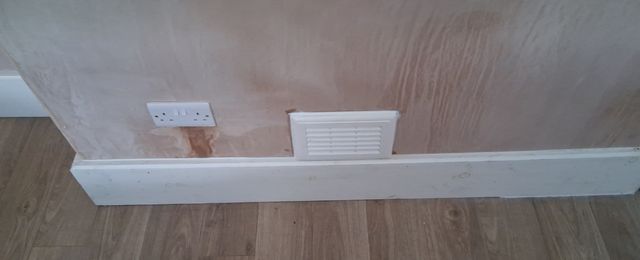
To prevent further issues there may need to be improvements to ventilation. Dry rot thrives in dark, damp and humid conditions, so ventilation can improve air flow and remove moisture. Airbricks are often used to increase ventilation in sub floor voids, but other methods such as PIV units and grilles can also be used for whole house ventilation.
Ventilation improvements may be required
From the first day on site, our technicians will talk you through the full process involved to remove the fungal decay, and to return your property back to its original state.
Our technicians will come prepared with protective floor coverings, Hilti dust extraction units and vacuums in order to keep your property clean and tidy. Where possible they will cover surfaces with dust sheets in order to keep disruption to a minimum.
Once all work has been completed and final sign off has taken place, you will receive a long term guarantee if applicable, giving you peace of mind the dry rot problem is solved, and your property is protected long term.
Our qualified technicians are equipped with dry rot fungus treatment solutions that have been certified to effectively deal with dry rot outbreaks. The fungicides and biocides used to treat and repair dry rot are:
Depending on the extent of the problem, our treatments can be applied by brush, spray or injection.
Rentokil Property Care expertly solved a severe Dry Rot issue.
When detailed in the survey report, our dry rot treatments are backed by long term guarantees - meaning you have long term protection. Dry rot can occur on surfaces with a higher than ideal moisture content. For this reason, it is important to keep your property free from dampness. It is advisable to carry out regular maintenance to prevent leaks, blocked airbricks and gutters or backed up drains.
There are many sources of damp and the most common is condensation, which can often be remedied simply by using extractor fans appropriately, opening windows where possible and heating your property evenly.
Simply put - the key to preventing dry rot is to stop excess moisture from building up in your property. Ventilation will allow timber surfaces to dry out so the spores don't have the opportunity to begin germinating on surfaces with moisture content above 20%.
As long term members of the Property Care Association and a Which? Trusted Trader, our specialist technicians have the skills, qualifications, craftsmanship and rot treatments to offer an effective solution to your dry rot problem.
As part of our treatment programme, all our dry rot treatments carry a 30-year guarantee on any work carried out by our team of property care technicians. Our guarantee can also be transferred over to any future owners, protecting your property for years to come against any potential re-infestations.
The costs associated with dry rot treatment will vary depending on what moisture source requires remediation, how much damage has been caused and the extent of the dry rot outbreak. Treating the fungus is fairly straightforward and will involve using a chemical treatment, however, the true cost of dry rot treatments will only become apparent after the amount of timber that needs to be repaired and replaced is established.
To get a true figure on how much dry rot treatment would cost, it is necessary for a professional surveyor to carry out a damp and timber survey. They will fully investigate the problem, which can often be more complex than expected as hidden areas may need to be exposed.
Once the surveyor has completed their survey, they will provide you with a detailed survey report outlining their findings, along with a quote for remedial repairs, if necessary.
If you think you have a dry rot problem in your property, you want to trust the company you are working with will get it right the first time. Rentokil Property Care has been working in peoples homes and businesses for over 70 years, correctly identifying property issues and providing long term solutions.
PCA approved: Rentokil Property Care are a proud member of the PCA and have a range of CSTDB, CSRT and CSSW qualified surveyors operating out of our local branch.
Which? Trusted Trader: We are endorsed by Which? Trusted Trader - meaning our customer service and workmanship has passed the rigorous trading standards assessments.
Trustpilot: Our damp proofing, structural repairs and timber treatments are rated ‘Excellent’ with over 1,000 reviews from our customers - showcasing our professionalism.
Long Term Commitment: From our origins in the 1920’s to the present day, we have outlived our guarantees several times over. This means you can have complete peace of mind from a Rentokil Property Care guarantee - up to 30 years for some of our services.
For more help and advice to identify and treat wood rot take a look at the links below.


