
Call to Book a Survey +448083018423 or Contact Us Online
Rising Damp and Dry Rot Treatments in a Ruislip Home
Ruislip is a leafy West London suburb known for its blend of historic architecture, green spaces, and traditional family homes. Many properties in the area, particularly those built before modern damp proofing methods became standard, are vulnerable to damp-related issues due to their solid wall construction and lack of an adequate damp proof course.
This was the case for a homeowner in a semi-detached property, who contacted us after noticing signs of damp on inside walls and deteriorating skirting boards.
Concerned about the long-term condition of the property, they got in touch with Rentokil Property Care for a full damp and timber survey.
Damp and Timber Survey in Ruislip, West London
A qualified Rentokil Property Care surveyor was sent to the property to carry out a detailed inspection of the building fabric, starting with the exterior.
As with all surveys, the assessment included checks to the roof coverings, rain water goods, ground levels, and any signs of bridged or missing damp proof courses.
In this case, no evidence of an original damp proof course was found.
A damp proof course is installed in buildings to prevent moisture rising upwards through masonry by capillary action. When moisture rises upwards from the ground it can contain hygroscopic salts that damage the internal plaster finishes. It can also cause skirting boards to rot, with moisture increasing the moisture content of timber.
Internally, the surveyor took moisture profile readings at the base of the wall and noted significant salt contamination and breakdown of plaster, clear indicators of a long-standing rising damp problem. Additionally, the timber skirting boards were showing signs of timber decay, caused by prolonged exposure to damp conditions.
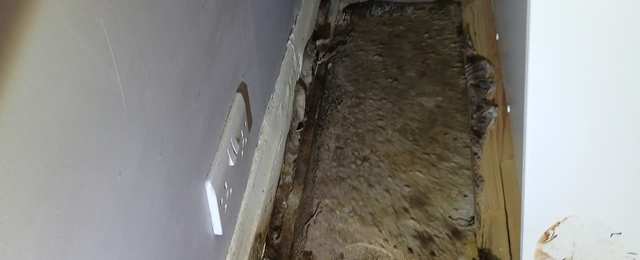
The surveyor removed the skirting and floorboards and found further evidence of a dry rot outbreak. Dry rot weakens the structural integrity of timber over time, compromising floors, joists and decorative finishes such as skirting boards.
The dry rot outbreak was confined to one room on the ground floor. The rest of the property was protected as existing underfloor ventilation was found to be adequate in the sub floor void, helping to protect subfloor timbers from a fungal attack.
Dry rot will typically require a dark, damp and humid space with a lack of ventilation. Once the conditions are right dry rot is capable of spreading throughout a property, thankfully the homeowner noticed the early signs and the dry rot outbreak could be prevented before any further damage could occur.
Damp Proofing and Dry Rot Treatments in Ruislip
After the survey, the homeowner received a comprehensive report, outlining the surveyor’s findings, including photographs and a detailed treatment plan.
The homeowner wanted to go ahead with the work immediately, and our local technicians proceeded with carrying out remedial treatments for the damp and timber decay.
Rising Damp Repairs:
- All affected skirting boards and salt contaminated plaster were removed to expose the bare brickwork.
- A chemical damp proof course was installed to form a water-repellent barrier, halting the upward movement of moisture.
- Walls were then replastered using our salt-retardant plastering system, preventing residual ground salts from migrating through the masonry and damaging the new wall finishes.
Dry Rot Repairs:
- All decayed skirtings were removed.
- Affected floorboards were removed, damaged joists cut back and wall plates replaced. Timber should be cut beyond the visible signs of damage.
- The next step is to apply a fungicidal treatment to kill any dry rot spores.
- Structural timber is then replaced and where joist ends are in contact with masonry are wrapped to protect from moisture ingress.
- New skirting boards were measured and fitted.
With the new damp proof course in place, the area was now protected long term from rising damp, preventing further fungal decay problems.
Long Term Solutions
All works were completed on time, and the homeowner received a 20-year transferable guarantee on the damp proofing, offering peace of mind and added value to the property.
The local surveyor said: “This property presented classic signs of rising damp and early-stage timber decay. Fortunately, the issues were caught early enough to prevent further structural damage. Our treatment ensured both the masonry and structural timber were protected for the long term.”
This case is a clear example of how rising damp and dry rot can silently affect the health of a home if left unchecked. With expert assessment and timely intervention, the property has now been restored, protected, and future-proofed against further moisture-related damage.